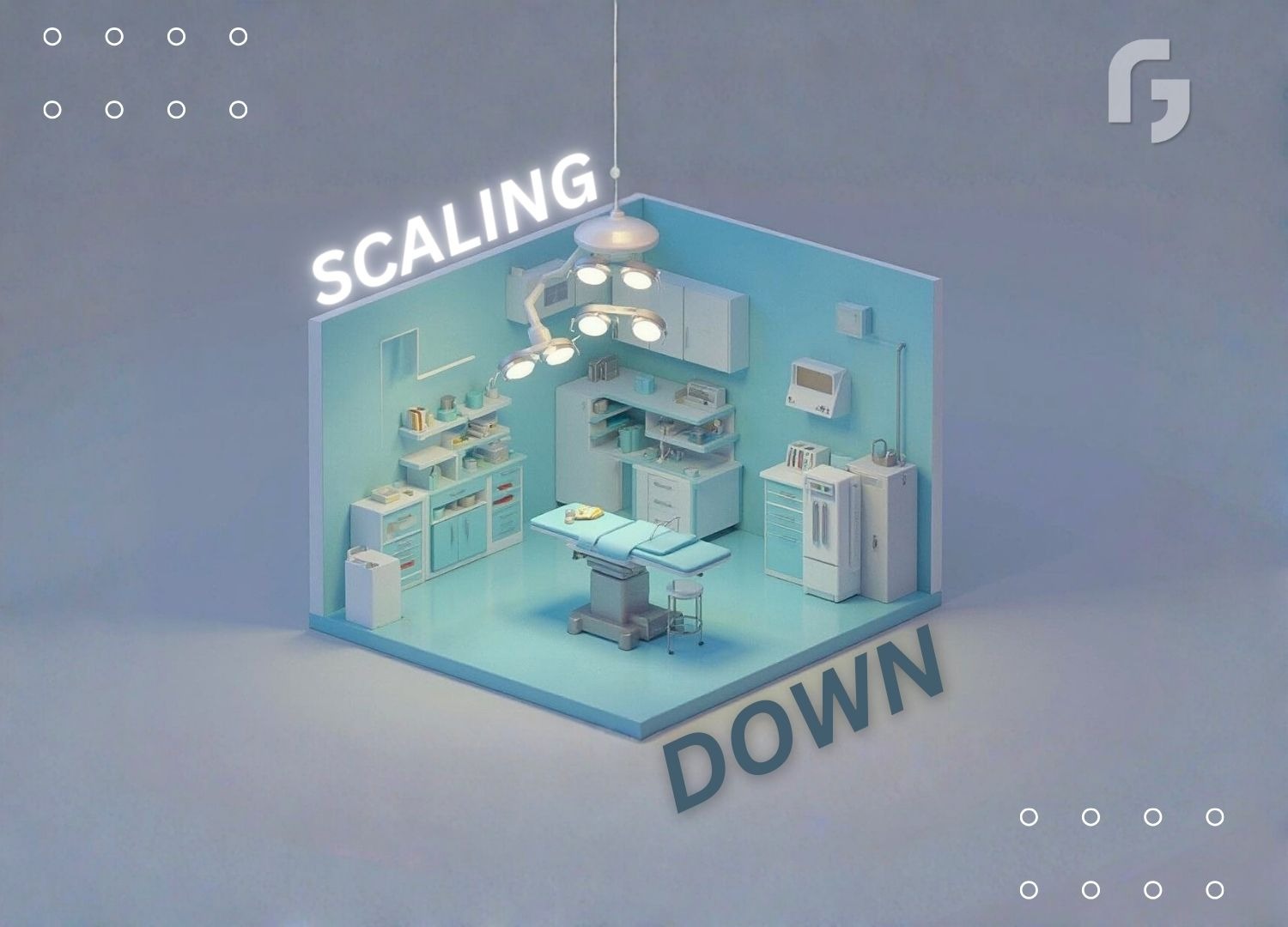
Scaling Down: The Tools You Can Barely See
Scaling Down: The Tools You Can Barely See
Scaling Down: The Tools You Can Barely See
The Most Important Tools Might Be the Ones You Can Barely See
Every few years, healthcare gets a new wave of technology promising to transform the way we practice. Bigger models. Bigger servers. Bigger data pipelines. The promise is always the same: more power means better outcomes.
But the more time I spend in clinical settings, the more convinced I am that the next leap forward will come from the opposite direction. We need to think smaller. Much smaller. In the operating room, size is never a trivial detail. Smaller instruments mean less trauma. Smaller incisions mean faster healing. Smaller sensors mean more precise data.
The same principle applies to digital tools. Micro scale processors that fit on a fingertip. Diagnostic sensors smaller than a grain of sand. AI models that run directly on wearable devices without ever touching a server room. These innovations reduce latency, reduce cost, and reduce the distance between patient and actionable insight.
And most importantly: they reduce risk.
If we can bring more intelligence to the bedside without relying on sprawling infrastructure, we make healthcare safer, calmer, more human.
The Regulatory Hump We Need to Get Over
But shrinking hardware is only half the challenge.
The other half is shrinking the friction.
Right now, we have a regulatory environment built around older, bulkier systems. Innovation can’t move at the speed of patient need when every new micro device or on-device AI model gets stuck behind frameworks that weren’t made for them.
This doesn’t mean abandoning caution.
Caution is part of care.
What it does mean is designing faster, smarter pathways that understand what these small-scale technologies actually do. If we don’t modernize our thinking, we risk slowing down tools that could prevent complications, reduce readmissions, and give clinicians more mental and emotional bandwidth to simply be human again.
We Also Need AI That Doesn’t Drain the Planet
There’s another piece of this story that often gets overlooked: sustainability.
Large AI models (and the massive data centers they require) consume extraordinary amounts of energy and water. Healthcare, already battling staffing shortages and financial strain, cannot afford technologies that introduce new systemic burdens somewhere else.
The future has to be lighter.
On-device AI without giant server farms. Edge computing that reduces the need for cloud dependency. Efficient models that don’t require oceans of water to cool.
The tools are already being developed. The question is whether we will prioritize them.
A Smaller, Smarter, More Human Future
When I talk with clinicians across specialties, the same anxiety comes up:
“Will technology make our jobs harder? Will it make healthcare more impersonal?”
The truth is, technology can only do what we ask it to do. If we focus on smaller, more sustainable AI and micro-tech that lives closer to the point of care, we not only reduce environmental strain, but also reduce cognitive strain. We give clinicians tools that support their presence instead of competing with it.
And ultimately, we reduce the distance between intention and action, between care and comfort, between clinicians and the patients who trust them. Sometimes the biggest breakthroughs aren’t the ones that take up space.
They’re the ones that quietly give it back.