Burnout
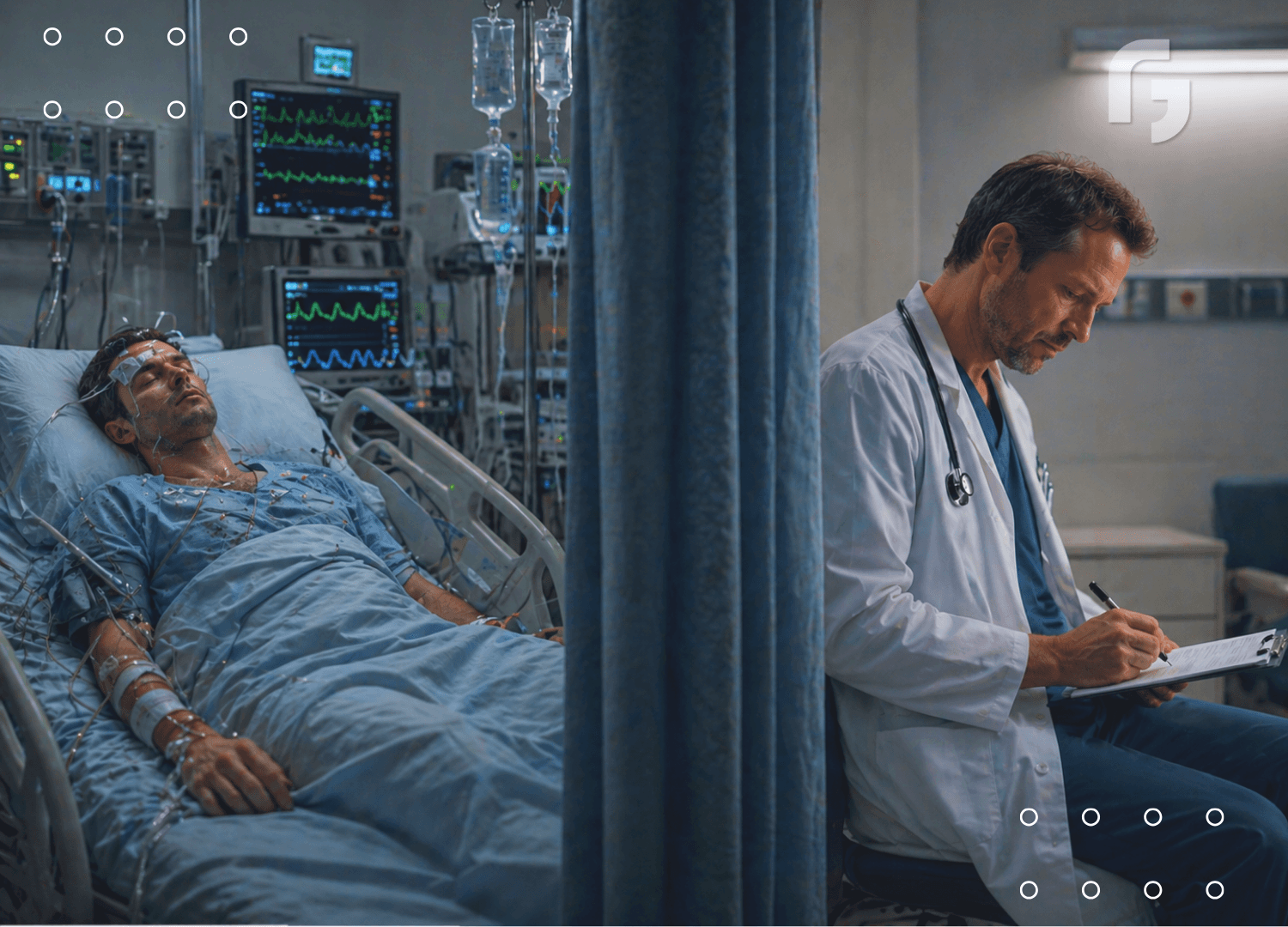
We catch sepsis before the patient knows they're dying.
Six hours out. Sometimes more. Because we built systems like scoring tools, lactate trends, and continuous monitors to watch for the signals the body sends before the crisis fully arrives. We trained ourselves to read those signals. We built technology around them. We made early intervention a standard of care.
Physician burnout has the same early signals. The same slow, measurable deterioration that precedes the collapse. We just decided, somewhere along the way, that the people running the hospital weren't worth the same level of attention as the people in the beds.
The Survey Problem
Every year, healthcare institutions across the country ask their clinicians to fill out a wellness survey. Sometimes it's 10 questions. Sometimes 22. It asks about workload, emotional exhaustion, a sense of personal accomplishment. It usually arrives in an email. It usually gets opened between patients, or at midnight, or not at all.
And when the results come back, they tell us what we already knew: burnout rates are high, morale is low, something must be done.
Then we form a committee.
I don't say this to be cynical. The people designing these surveys are trying. The researchers who built the frameworks (going back decades) gave us something real and important. We understand burnout conceptually better than we ever have. The problem is not the knowledge, but rather the measurement.
By the time a clinician checks a box on a wellness form, the damage is already done. The survey doesn't catch burnout but it does document the aftermath.
What the Body Already Knows
Here is what I've come to believe after years in trauma surgery and years spent at the intersection of clinical medicine and technology: the body knows it's burning out long before the mind is willing to admit it.
Heart rate variability drops. Sleep architecture fragments — not dramatically, but consistently, in ways that accumulate over weeks. Cortisol patterns shift. Inflammatory markers change. The same physiological signals we use to monitor recovery in elite athletes, to track disease progression in chronic illness, to predict deterioration in ICU patients — those signals are present in a clinician heading toward burnout months before they hand in a resignation letter.
We have the sensors. Rings, patches, continuous wearables that people already wear voluntarily. We have the AI to find patterns in that data that no individual could see in themselves. We have the clinical knowledge to know what we're looking for.
What we haven't done is decide that this is worth doing.
The Duty of Care We Aren't Discussing
There is a conversation happening in healthcare about AI and efficiency. About ambient scribes reducing documentation burden. About scheduling algorithms and workflow optimization. These are good conversations. They matter.
But there is a quieter conversation we need to have; about whether healthcare systems have a duty of care to the clinicians they employ that goes beyond an Employee Assistance Program number printed on a laminated card.
I've watched talented people leave medicine. It’s a quiet process where one begins losing the thread of why they started. And then went to consulting, to industry, to something that asked less of them. Every time, in retrospect, the signs were there. We just didn't have a system for reading them.
The technology to build that system exists right now. The question is whether we have the institutional will to use it and intervene early, with support, before a person reaches the point where leaving feels like the only option.
We built early warning systems for the patients. It's time we built one for the people taking care of them.
——————————————————————————————————————
Dr. Rafael Grossmann is a trauma surgeon, digital health innovator, and global keynote speaker. He speaks on AI in medicine, surgical robotics, physician burnout, and the future of patient care. To book Rafael for your next event, visit rafaelgrossmann.com


